Narrowing of curriculum is an equity issue

This piece says what I think we all know, namely that “extra-curriculars” such as music, art, and foreign languages are actually central to learning.  And not just because they make kids “well-rounded”; they actually improve cognition, and teach valuable skills.  Research shows that musical training, for example, “produces long lasting changes in motor abilities and brain structure.”  As the author states, “Concentration, strong recall skills, evolved communiPaintingcation skills, and being a good team player are just a few of the benefits research shows music, foreign language and physical education have on a developing mind.”

These subjects are being pushed out of the classroom curriculum as high-stakes standardized testing dominates the K-12 landscape.  The narrowing of the curriculum in this way has many obvious drawbacks, but one that deserves more attention is the equity concern.

A lot of parents in Berkeley can afford to supplement their children’s education with these programs, but many more cannot.  And they shouldn’t have to.

Accountability without standardized tests?

I love this story from KQED about a school district in Colorado, because it is an example of local educational officials showing leadership when it comes to challenging our high-stakes standardized testing culture.  The Douglas County School District, outside Denver, is advocating the use of performance-based assessments, which test not only what children know, but how they use what they know.  District officials in Douglas County are not trying to avoid accountability, or even do away with standardized tests altogether.  But, they recognize that a focus on one year-end test can narrow the curriculum, constrain teaching, and inhibit student learning.

Most inspiring to me is the acknowledgement from the lead district official in Douglas County that the positive aspects of the new Common Core standards will be lost if the focus on standardized testing continues:  “While she finds the Common Core State Standards promising as an outline of the skills students should learn, she worries that if the implementation boils down to focus on how schools do on the assessments, then all the effort will end up looking a lot like the last 14 years of high-stakes testing.”  Indeed.

We should have an instructional technology plan

I’ve written before about the fact that BUSD is far from leading the way when it comes to instructional technology (or communications technology, for that matter).  I appreciate, and share, our superintendent’s vision that BUSD become a “world-class” district.  But no 21st century world-class public school district is without a comprehensive plan for the use of technology in the classroom.  The development of such a plan, coordinated by instructional leaders with input from the many resources we have in our parent community, should be a top priority for the district.Tablet

Many parents and teachers are wary of plans to use more technology in the classroom.  And perhaps with good reason; there are plenty of “tech in schools gone awry” stories to warrant proceeding with caution.  But there are also many examples of uses of technology in the classroom that enable differentiated learning, help close the “digital divide,” and engage more girls and students of color in STEM fields.  This short piece, in a newsletter devoted to educational technology issues, has a number of sensible tips for K-12 districts contemplating improvements in their use of instructional technology. It makes the important points that it is wise to start small, leverage early adopters, and, most importantly, start with a vision that is grounded in instruction, not just the latest device or gadget.

Fully implementing a true technology vision for BUSD will likely require resources we don’t currently have.  Part of the vision, and the action plan, should be to look outside the district for technology resources.  San Francisco has done so; we should too.  But as advocates of cooking and gardening know all too well, it’s very difficult to attract outside funding without a clear plan for the future.  Creating that plan is the first step, and it’s not a costly one.  We should take it.

Costs of the juvenile justice system

My colleague Kate Weisburd has written an important piece for Huffington Post about a little-known aspect of our juvenile justice system, namely the crippling fees and costs that are imposed on kids who have otherwise paid their debt to society through incarceration, electric monitoring, drug testing, and probation.  She reports:

In Alameda County — arguably one of most liberal counties in the country — the juvenile court fees are steep. Families are billed $15 for each day that their children are on electronic monitoring, $25.29 for each night in juvenile hall, $28.68 for court-ordered drug tests, and $90 for each month that their children are on probation, among other fees. The tab adds up quickly. If a family does not pay, the debt is forwarded to the Tax Franchise Board and the parents’ wages are garnished. To make matters worse, youth are charged a non-refundable fee of $150 to apply for record sealing, without any guarantee that the record will be sealed.

Kate and her law students working in the Youth Defender Clinic at the East Bay Community Law Center advocate every day for children in the juvenile justice system.  Their clients are not beyond redemption.  They need support to turn their lives around, and the system as it currently exists is setting them up for failure, which does nobody any good.  Kudos to Kate for shining a spotlight on this issue, and for noting that specific solutions are feasible.

The word gap

Quality early childhood education is critical, and we need to explore all options for expanding it.  But researchers are increasingly convinced that the playing field becomes uneven well before preschool, when babies and toddlers are exposed to words at a strikingly different rate depending on their socio-economic class.  Too Small To Fail

My friend Ann O’Leary is doing ground-breaking work to close the “word gap” through the initiative she directs, Too Small To Fail.  Today’s New York Times describes Ann’s effort and those like it around the country.  As the article explains, “Recent research shows that brain development is buoyed by continuous interaction with parents and caregivers from birth, and that even before age 2, the children of the wealthy know more words than do those of the poor.”  That’s a scary statistic.

Exposing children from low-income homes to more words at an early age will not eliminate poverty in this country, but it will provide them with greater opportunities to succeed when they are old enough for school.  All children should start kindergarten ready to thrive in public school.  The work Ann and her colleagues are doing gets us closer to that goal.

Why doesn’t BUSD text or tweet?

Chart

The Huffington Post, Feb. 2, 2014

Berkeleyside had an excellent article (really an exposé) yesterday about the City of Berkeley’s failure to develop a social media policy after three years of study.  Emilie Raguso’s reporting focused in particular on law enforcement, and how the Berkeley police might be able to use social media to help solve crimes and alert the public to ongoing danger.

The article didn’t mention the school district’s absence from social media, but I find it just as glaring as the city’s absence.  Individual schools, like Rosa Parks, have robust Facebook pages (and less-than-robust Twitter feeds), but BUSD has no Facebook page, no Twitter account, and, as far as I know, does not use text messaging as a way of reaching a broad swath of the community with important announcements.  The District uses its website, as well as email and phone blasts, as the primary means of communication. To be fair, the website has a ton of content and is much easier to navigate than it used to be, and the relatively new “A+” newsletter is a welcome source of information in a concise, easy-to-read format. So there has been a lot of progress.

But ultimately this comes down to communication, which has received more attention from the District in recent years, but has long been a weakness.  Communication with parents and the larger community is critical — to engage parents (including non-English speakers) in their children’s educational life, and in case of emergencies.  For example, parents revived Rosa Parks’ dormant Twitter feed immediately following the Sandy Hook tragedy, because we realized it would be a highly effective way to disseminate information quickly in an emergency.  There is no reason why the District cannot have a Twitter feed.

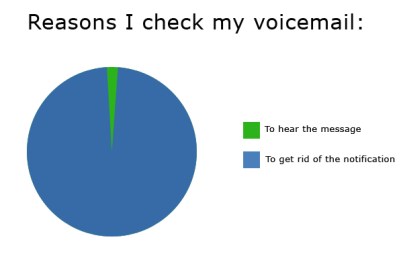
The District should also add texting to its communication toolbox.  Many families do not have or use email regularly, and apparently nobody listens to voicemail anymore.  Many of the parents in the BUSD community have cell phones and can receive text messages, however.  There are any number of mass-texting products on the market, including this free product designed specifically for schools.  Let’s show the city how it can be done.

Diane Ravitch weighs in

Diane Ravitch has had a fascinating career.  A former top policy maker for President George H.W Bush, she was once a strong proponent of No Child Left Behind and the charter school movement.  Diane RavitchShe eventually became disillusioned with punitive measures that weakened public schools, narrowed curricular offerings, and failed to achieve equity in educational opportunities and outcomes.  She is now one the most visible national advocates for public education, and certainly the most vocal national critic of our current high-stakes standardized testing culture.

I was thrilled to see the other day that she had chosen to spotlight one of my blog posts on her own blog.  Her post concluded:

Ty is a graduate of the public schools in Berkeley, so is his wife. Both his parents worked in public schools.  I bet he would be a great addition to the Berkeley school board.

Thanks Diane!

Parents who challenge the status quo on testing

I am posting this piece by Rebecca Mead in the New Yorker with the caveat that California is not New York, and the disastrous experience New York has had with the Common Core will hopefully not be replicated in Berkeley, or anywhere in our state.  Moreover, there has not been much of an “opt-out” movement in Berkeley among those who don’t like the idea of their children spending precious instructional hours practicing for tests that are of limited value to students, parents, or teachers.  But I am posting the piece because I like how Mead describes the motivations of parents who challenge the status quo with respect to high-stakes testing:

[They] are not motivated by a deluded pride in their children’s unrecognized accomplishments, or by a fear that their property values will diminish if their schools’ scores’ drop. They are, in many cases, driven by a conviction that a child’s performance on a standardized test is an inadequate, unreliable measure of that child’s knowledge, intelligence, aptitude, diligence, and character—and a still more unreliable measure of his teachers’ effort, skill, perseverance, competence, and kindness.

I also appreciate her point that “parents who are least equipped to speak out are the mothers and fathers of the children who are most vulnerable—the most likely to have their educations diminished by months of repetitive test prep, most likely to find themselves reduced to the statistical data at the wrong end of the bell curve.”  After all, it is entirely consistent to challenge the status quo on testing and still hold the belief that racial predictability in student achievement is inexcusable.

To this point, thankfully, New York’s experience has not been ours.  If we (parents and teachers) are vigilant, we can work to ensure that we avoid the mistakes that have been made in New York.

When data doesn’t mean test scores

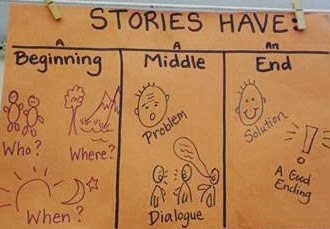
Rosa Parks teacher Brook Pessin-Whedbee teaches kindergartners how to tell stories

Brook Pessin-Whedbee teaches five-year-olds at Rosa Parks.  I teach law students in their mid-20s.  As a kindergarten teacher, Brook teaches her students how to collaborate in the telling of stories, so they develop not only oral language and story writing skills but also the ability to form partnerships and work together.  As a clinical law professor training and supervising law students in the complex representation of clients facing the death penalty, I teach my students how to collaborate in the telling of stories — stories of our clients’ lives, of unfair trials, of prosecutorial misconduct, etc.  Brook and I have the same goals: to improve our students’ oral and written skills, and to teach them what it means to work productively as part of a team.

Brook recently wrote a blog post about the work she has been doing as part of the Mills Teacher Scholars program to improve her practice as a teacher, specifically related to teaching kindergartners how to collaborate in the telling of stories.  I saw Brook present about her inquiry as part of a showcase last year, and I was immediately struck by two things:  first, as a fellow educator, that Brook’s pedagogic inquiry related directly to my own teaching of adult learners; and second, as a parent, that it was enlightening and somewhat thrilling to see teachers in the Berkeley public schools make productive use of real-time classroom data to inform their instruction.

We hear a lot about data these days, and there are benefits to crude data (like the results of an annual standardized test such as the CST) in terms of spotlighting racial and socio-economic disparities in student achievement generally.  But parents like to think, and they deserve to know, that their children’s teachers are continually and consistently assessing their learning, not just to demonstrate overall trends in the school or the district, but in order to help their children learn and grow.  But when we think of assessments, we think of tests; and when we think of data, we think of test results.  Brook’s data, in contrast, consisted of video of her students interacting; their written work; conversations she observed between students; and conversations she initiated with students.  As she writes, reviewing this data and sharing it with teacher colleagues in a collaborative inquiry has made her a better teacher:

[T]hrough collecting and analyzing authentic data from the students in my classroom, my teaching practice has deepened. From slowing down and zooming in on their process, I have learned to notice patterns in the partnerships and to adjust my teaching to facilitate more collaborative relationships. I have learned that it’s ok for partners to struggle, to stick with a difficult pairing and to do the hard work of learning how to work together.

This is an example of teaching students important skills that simply cannot be tested.  There is no standardized test that can measure Brook’s students’ ability to collaborate.  Yet this is a critical life skill, one that my colleagues and I are still teaching to our law students, decades after they’ve graduated from kindergarten.

Read Brook’s post if you have a few minutes.  Whether you are a parent or an educator, I think you will find it inspiring.

Testimonials

As I said on my Facebook page (which you should “like” if you want to stay current on the campaign), I am honored just to know these five extraordinary women – Maria Echaveste, Sujatha Baliga, Mai Linh Spencer, Matilde Merello, and Carrie Wilson – let alone have their support in my run for school board.  Below is a three minute video with short clips from each of them.